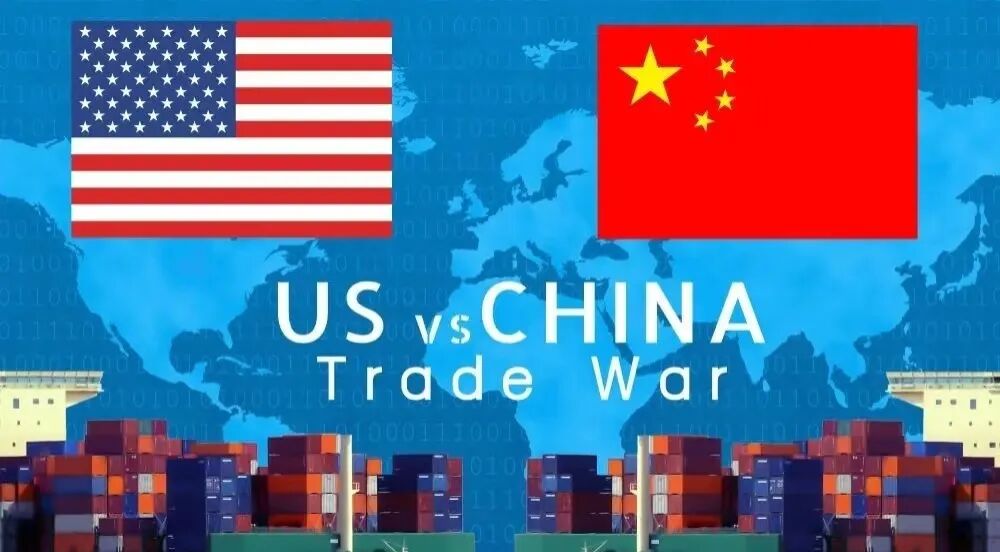
When the U.S. "Reciprocal Tariffs" policy swept across more than 70 countries in 2025, with the combined implementation of a 100% additional tariff on China and export controls on key software, a worldwide restructuring of economic and trade governance officially entered a critical phase. This is not an isolated trade move, but a continuation of the U.S. strategic shift from a defender of the multilateral system to a saboteur bent on restructuring. It has plunged the trade order, which relies heavily on global value chains, into a vortex of high volatility. For the first time, the global trade volume affected by restrictive measures has exceeded that covered by facilitation measures. Among the $2.9 trillion in trade under restrictions, over 80% is directly linked to U.S. policies, putting the multilateral trading system under the most severe systemic challenges since World War II. Amid such upheavals, we urgently need to explore: Why has the trade order shifted from prosperity to fragmentation? What lies behind the underlying logic of the U.S. policy reversal? And how can we find a way out for global economic and trade governance?
The rise of global value chains has long been the core driving force behind the trade order. In 1970, trade in global value chains for the manufacturing sector accounted for a mere 37% of total global trade; by 2007, this figure had exceeded 50%, and has since maintained a dominant position in global trade. The share of service trade in the value chain also rose to 37% at one point. Low - and middle - income countries have been major beneficiaries of this process. Between 2010 and 2020, China's participation in global value chains increased by an average of 5% annually, and more countries have improved their living standards by integrating into the supply chain.
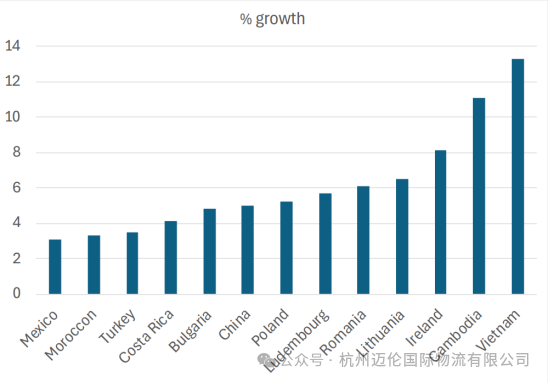
Looking back at history, the General Agreement on Tariffs and Trade (GATT) established after World War II and the subsequent World Trade Organization (WTO) system have injected lasting impetus into global trade by reducing tariffs and establishing dispute settlement mechanisms. The proportion of global merchandise exports in GDP soared from 5% in the early 19th century to 25% in the 21st century, and a miracle of poverty reduction was achieved. The global extreme poverty rate dropped from over 50% in the 1980s to 10% in 2019, lifting 1.3 billion people out of poverty. Behind this lies the core value of trade as a carrier for knowledge dissemination and technology spillover.
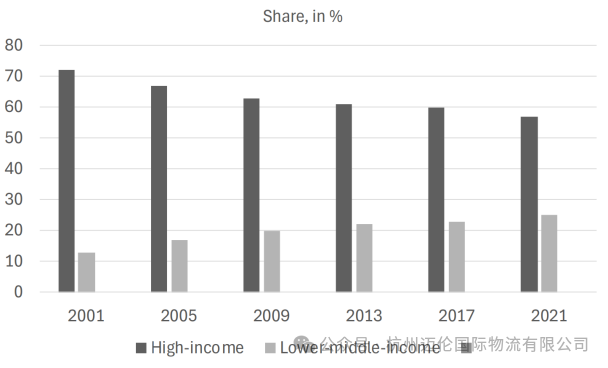
However, the 2008 financial crisis marked a crucial turning point, and waves of protectionism have spread ever since. The latest WTO report shows that between October 2024 and October 2025, G20 countries introduced 185 restrictive trade measures, a record high. The United States has been the main driver of this trend. Its measures, such as imposing additional tariffs of 25% - 50% on many countries and revoking duty - free exemptions for low - value goods, have caused the proportion of globally restricted imports to surge from 12.9% to 22%. More alarmingly, "national security" has become a one - size - fits - all excuse for trade protection. Article 21 of the GATT, which deals with security exceptions, has been frequently abused, and strategies like "reshoring" and "nearshoring" have exacerbated the fragmentation of supply chains. Geopolitical competition has further pushed the global economy towards bloc - based division. Simulation data indicates that a complete technological decoupling between the United States and China could lead to a 4% decline in China's GDP and a 3% decline in the U.S. GDP. Low - income countries may suffer a short - term output loss of up to 10.8%, and global innovation and productivity growth will face long - term pressure.
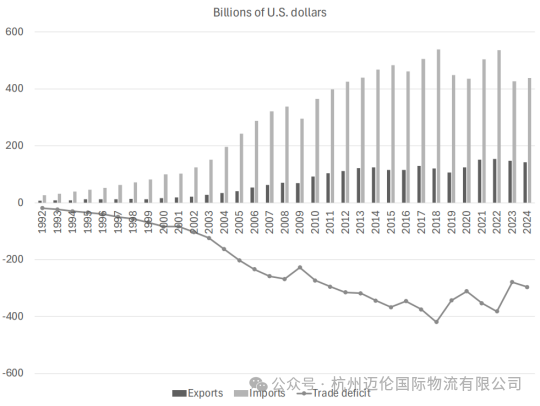
The Bretton Woods system dominated and established by the United States after World War II, along with its evolutionary framework, has brought the U.S. unparalleled institutional advantages and enabled it to act as a defender of the multilateral system for a long time.
Firstly, the seigniorage and sanctions dividends brought by the U.S. dollar hegemony. By the end of 2024, the U.S. dollar accounted for 53.63% of global foreign exchange reserves and 49.68% of international payments. This special status has allowed the United States to obtain a threefold "external seigniorage", including issuance seigniorage, inflation tax, and gains from being an international reserve currency. More importantly, the U.S. dollar hegemony has endowed the United States with strong financial sanctions capabilities. Through the International Monetary Fund (IMF) and the Society for Worldwide Interbank Financial Telecommunication (SWIFT) system, it can exclude targeted countries from the international financial system to achieve its strategic goals.
Secondly, the unique profit - making mechanism of the "U.S. dollar cycle". Based on the innovative practice of the Mundell - Fleming model, the United States provides U.S. dollar liquidity to the world by maintaining a trade deficit, and the outflowed U.S. dollars flow back to the U.S. capital market through financial investments, forming a closed loop. Since the 1980s, this model has become increasingly mature. The high consumption and low savings in the United States complement the low consumption and high savings of its trading partners, supporting the continuous operation of the global economy amid imbalances.
Thirdly, the dominant profits from the division of labor in global value chains. By dominating the WTO system, the United States has established an asymmetric industrial division of labor pattern. Relying on its advantages in technological innovation, financial services, intellectual property rights and other fields, it has seized the high - profit links at both ends of the "smile curve" and shifted labor - intensive manufacturing links to developing countries, thus long - term seizing most of the profits in the global value chains.
In recent years, the U.S. attitude towards the multilateral order has undergone a fundamental transformation, shifting from active maintenance to destructive restructuring. This change is the result of the combined effect of domestic pressures and changes in the international landscape. Its specific manifestations are distinct: withdrawing from multilateral mechanisms such as the Trans - Pacific Partnership (TPP) and the Paris Agreement, paralyzing the WTO dispute settlement mechanism, launching tariff wars and technological wars, abusing financial sanctions, and establishing exclusive "small cliques". A series of these actions are aimed at subverting the existing system.
One of the underlying drivers is the intensified internal contradictions of the U.S. dollar hegemony. After the collapse of the Bretton Woods system, the United States has relied on the U.S. dollar circulation model of "issuing through trade channels and returning through financial channels". However, this model faces a new form of the "Triffin Dilemma". An overly strong U.S. dollar impairs export competitiveness and worsens the trade deficit. Moreover, the conflict between the responsibility of supplying global liquidity and the pressure of expanding trade deficits has created an irreconcilable policy predicament, leading to a continuous rise in the cost of maintaining the U.S. dollar hegemony.
Domestic governance dilemmas have also become a major driving force. Although the global industrial division of labor under the free trade system has brought substantial profits to the United States, it has resulted in a serious hollowing - out of manufacturing and political divisions. A large number of middle - income jobs in traditional manufacturing have disappeared, forming a "dumbbell - shaped" employment structure with high - skilled, high - income jobs on one end and low - skilled, low - income jobs on the other. The development gap between the financial and technological hubs on the East and West Coasts and the "Rust Belt" in the Midwest has further solidified the opposition between social classes and political stances. Domestic pressures have forced the government to turn to trade protectionism.
The core driver is the institutional pressure brought by the rise of emerging economies. Emerging economies represented by China have developed rapidly within the existing order, reshaping the global power structure and the distribution of discourse power. This shift in the balance of power has triggered intense strategic anxiety in the United States. Therefore, the "destructive restructuring" it promotes is not a gradual reform, but an attempt to break the existing order and establish an exclusive governance structure that serves its own interests. As a result, global economic and trade governance has entered a new era characterized by fragmentation and conflicts.
Faced with multiple pressures such as blocked transit trade, technological blockades, and shrinking external demand, China, as a stabilizing force in the global trade order, is seizing opportunities amid crises. The U.S. sabotage of multilateral rules has objectively provided strategic space for China and other emerging economies to promote the reform of the governance system and build a more inclusive and resilient non - U.S. economic and trade order.
The multilateral trading system remains the core guarantee for the stability of global trade. China should join forces with economies affected by tariffs. It can jointly sue the United States for its illegal tariff measures within the WTO framework, promote the restoration of the function of the Appellate Body, and safeguard the authority of the rules. It should also deepen the implementation effects of the Regional Comprehensive Economic Partnership (RCEP), establish a coordination mechanism among member states to respond to tariff shocks, provide alternative markets for affected countries, and make RCEP a model of regional cooperation against protectionism. Additionally, China should advocate the "Global Trade Stability Initiative" on platforms such as the G20 and APEC, build international consensus against unilateral tariffs, and inject certainty into the volatile global governance.
Expanding market openness is a key measure. China can relax market access and implement broader low - tariff treatments for countries such as Cambodia and Vietnam that are subject to high U.S. tariffs, giving play to the role of its huge market of 1.4 billion people as a "stabilizer". Through institutions like the Asian Infrastructure Investment Bank (AIIB) and the New Development Bank of BRICS countries, China can provide development financing for affected developing countries and set up a "Trade Finance Support Fund" to help enterprises tide over difficulties. It should promote the cross - border payment system of the Digital Yuan to offer countries an alternative payment option outside the U.S. dollar system. Meanwhile, building a "Supply Chain Partnership Network" to ensure the stable supply of key commodities and using digital technologies to help Chinese enterprises move up to the high - end of the global value chain is also essential.
To cope with tariff shocks, it is necessary to adhere to economic logic. China should actively advocate the depoliticized nature of economic and trade cooperation in multilateral forums and resist the constraints imposed by the "pan - securitization" narrative on cooperation. When formulating countermeasures, it should exercise prudence and restraint, ensure transparent procedures and clear standards, establish an open and transparent trade remedy assessment mechanism, and safeguard normal business transactions. China should strengthen pragmatic cooperation with third parties such as Europe, the Association of Southeast Asian Nations (ASEAN), and Latin American countries. On the basis of jointly responding to U.S. tariff pressures, it can build a "de - securitized cooperation alliance" and expand the space for mutually beneficial cooperation.
Strengthening technological innovation is the core support. China needs to increase investment in basic research, focus on high - tech fields blocked by the United States, establish a new system for mobilizing resources nationwide to tackle key core technologies, and enhance the independence of industrial and supply chains. It should accelerate the construction of a unified national market to offset the impact on the export market by expanding domestic demand and unlock the advantages of its super - large - scale market. Promoting the diversification of trading partners, developing emerging markets such as countries along the "Belt and Road" and RCEP member states, and building a diversified export pattern will fundamentally reduce the risk of over - reliance on a single market.
The global economic and trade order is experiencing unprecedented changes in a century. Although the destructive restructuring by the United States has caused short - term shocks, it has also forced the governance system to transform towards a fairer and more resilient direction. The core value of multilateralism is still relevant, and the rise and cooperation of emerging economies are injecting new vitality into global governance. By defending multilateral rules, strengthening the supply of public goods, adhering to depoliticized cooperation, and building an independent circular system, China can not only effectively withstand the tariff storm but also promote the establishment of an inclusive, fair, and sustainable new global economic and trade order.
History has proved that there are no winners in zero - sum games, and unilateralism is doomed to failure. Only by abandoning the Cold War mentality and adhering to the core principles of multilateralism and mutual benefit can we resolve the deep - seated contradictions in global economic and trade governance and realize the steady recovery and long - term development of the world economy through cooperation.
 Tracking shipments